Our team knows the feeling of looking out at a flooded basement stairwell and feeling that sudden drop in your stomach.
You are definitely not the only homeowner dealing with this stress.
According to recent US statistics, the average water damage restoration costs a homeowner over $4,250.
We want to help you avoid that hefty bill completely. That is exactly why understanding the basics of Walkout Drainage Repair can save you so much time and money. The steps outlined below show exactly how professionals solve these issues every day.
Our goal is to walk you through the entire process simply and clearly. Grab a cup of coffee. Let’s go through the details together.
Why Walkout Drainage Problems Happen
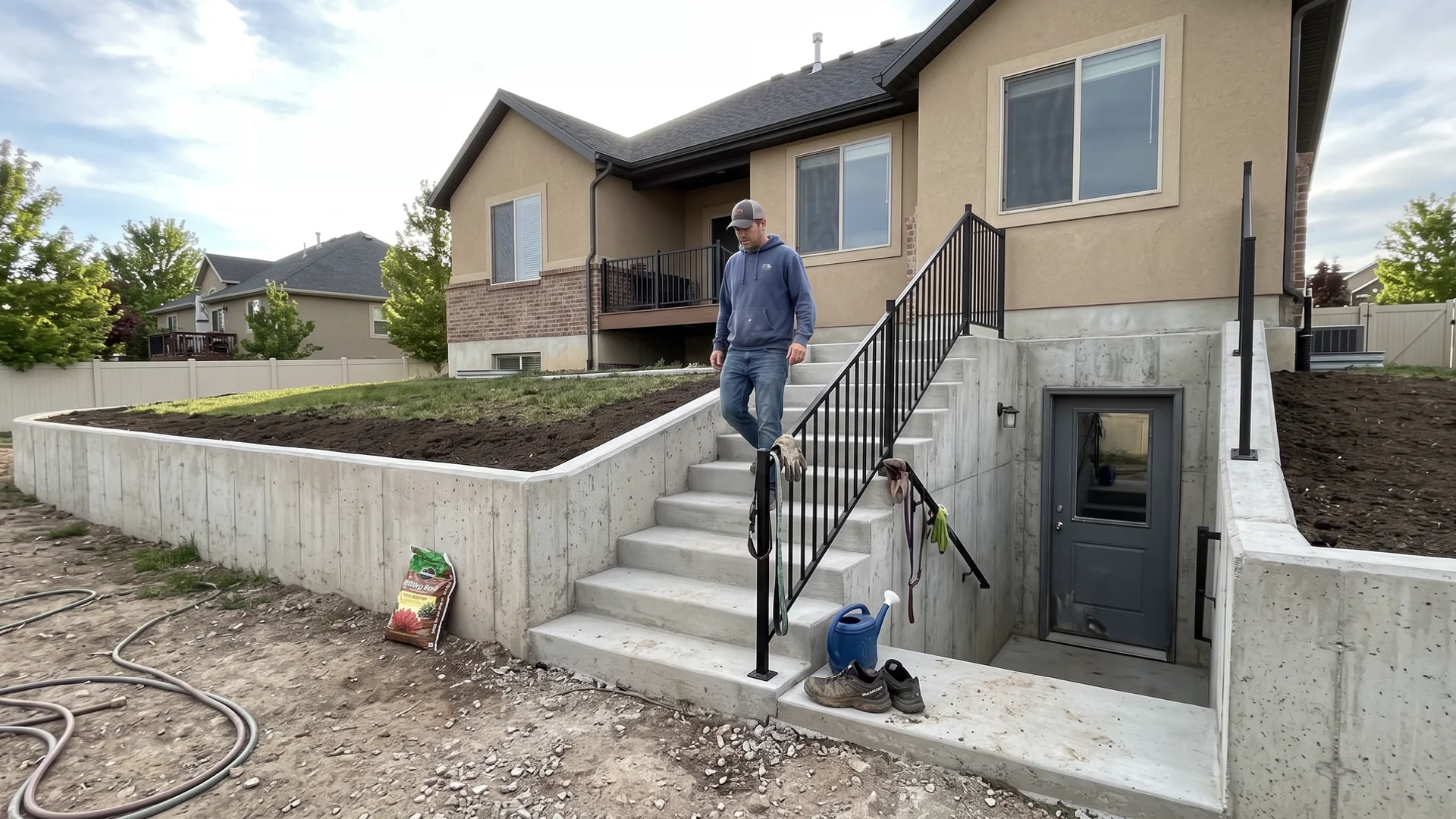
We often see basements flood simply because the rainwater has nowhere else to go. A basement walkout creates a below-grade low point right beside your door. Rain, snowmelt, sprinkler overspray, and runoff from the yard all head straight to it.
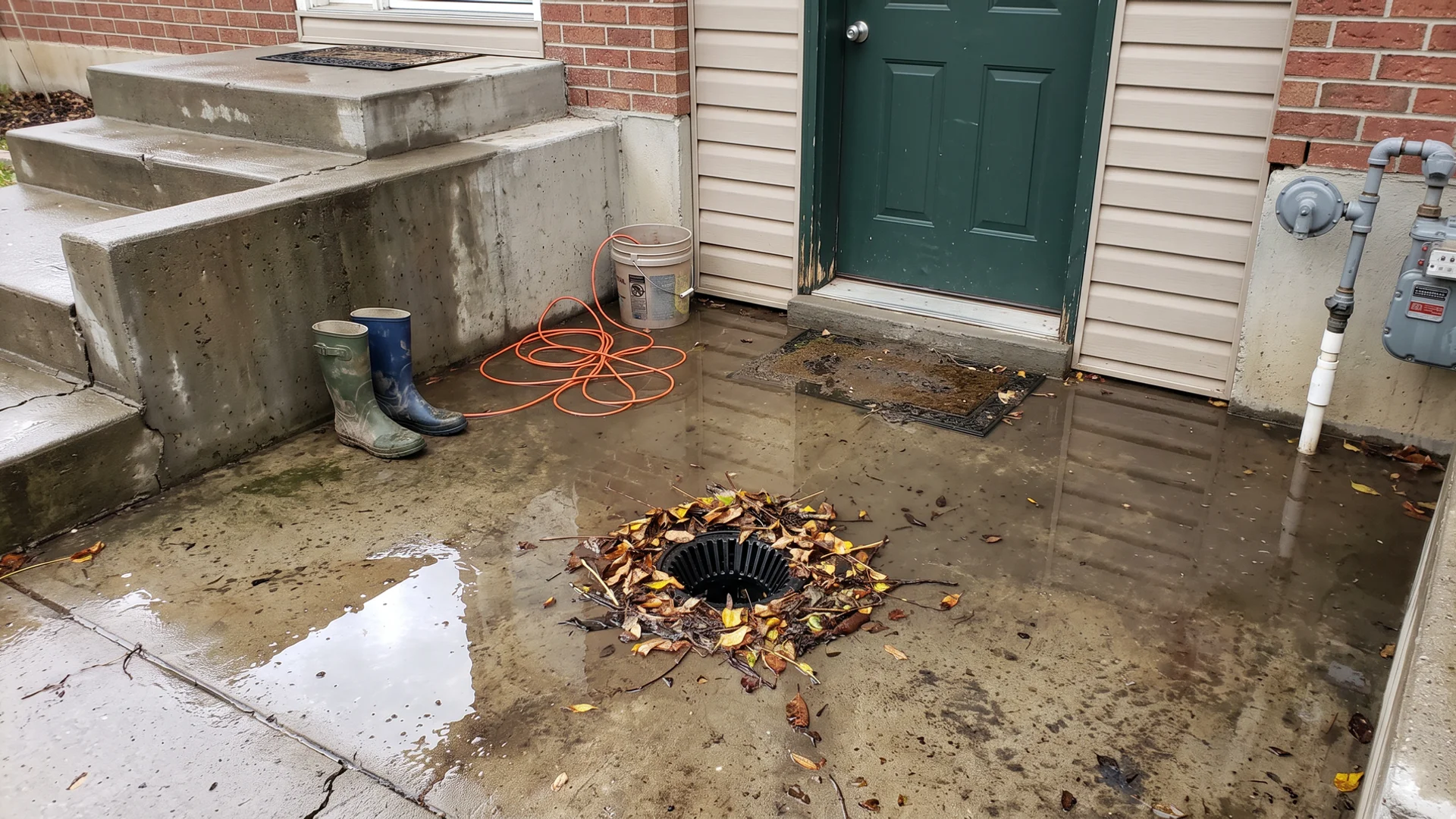
Our experience shows that if the drainage at the bottom cannot take that water, it simply rises up the landing and spills over the threshold. Most flooding and clogging does not come from bad luck. It actually comes from how the drainage was originally built.
We cover the common causes in depth in our guide on why basement walkout drains fail. The specific culprits usually include:
- Small floor or shower-style drains that were never sized for outdoor water volume.
- Sediment, leaves, and dirt from seasonal debris and landscape erosion.
- Inaccessible drains that hide blockages until they are completely sealed shut.
- Concrete contamination during the original construction that reduced drainage from day one.
- Reduced storage capacity, meaning there is no buffer when heavy storms hit.
- Poor grading that funnels surface water directly into the stairwell.
- High groundwater or hydrostatic pressure pushing water up from below.
- Poor maintenance, often because there is no practical way to clean the drain.
- No supplemental pumping option when passive capacity is exceeded.
Yard soil should ideally drop 3 inches over the first 5 feet to move water away safely according to recent landscaping standards.
We view drainage as an entire connected system, not just a hole in the landing. Fixing the issue means looking closely at every single part. A lasting solution requires patience and proper diagnosis.
Our Approach: Evaluate the Whole System
Our approach starts with a complete evaluation, rather than just snaking the drain and leaving. Specialized tools, like CCTV drain cameras, help pinpoint exactly what is happening underground. This equipment lets the inspector find the real issue instead of just guessing.
We specifically look at several critical details:
- The drain itself. Size, type, depth, and whether you can actually access it.
- Sediment. What is collecting, how fast it builds up, and where the mud is coming from.
- Landing slope. Whether water on the landing heads to the drain or straight to the door.
- Grading above the stairwell. Whether the yard sends water and mulch down into the walkout.
- Waterproofing and walls. Signs of seepage, cracking, or foundation movement.
- The outlet. Where water goes after the drain, and whether it can flow out freely.
- Groundwater clues. Water appearing without rain, wet joints, or seepage patterns.
Those gathered clues allow the technician to recommend the exact fix that matches the root cause. You can read more about making the right choice in the breakdown on whether to clear the clog or upgrade the system.
Types of Walkout Drainage Repair
We know that not every problem requires the exact same fix. These are the main categories of work for a proper repair. The right method depends entirely on your home’s unique layout.
Clean-Out and Grading Correction
Our process often begins with a simple clean-out when the drain is already reasonably sized. A standard 25-foot manual drain snake can clear light hair or leaves easily. Compacted soil, however, often requires professional hydro jetting running at 3,000 PSI to blast away the debris.
We pair this cleaning with a stair-top curb, or by regrading the soil and stabilizing the eroding bed above. This simple combination can be enough to solve the issue completely. You can see how this works in the detailed guide on grading around a basement walkout.
Capacity Retrofit
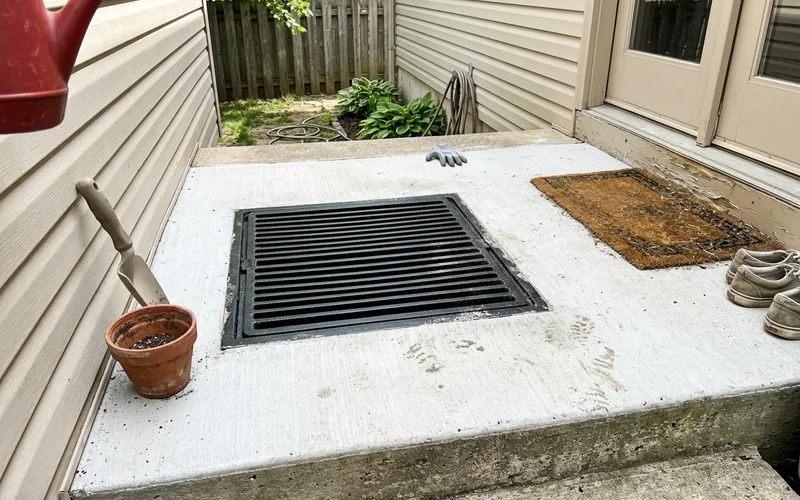
We perform capacity retrofits to permanently fix chronic flooding issues. The crew removes the landing as needed and installs an accessible catch basin of roughly 12 by 12 by 12 inches. A professional-grade NDS 12-inch catch basin handles an impressive flow rate of over 155 gallons per minute.
Our installation pairs this basin with a subsurface reservoir of about 50 gallons and surrounding washed drain rock wrapped in filter fabric. In a representative system, that setup adds up to roughly 75 to 100 gallons of combined passive capacity. The new landing is then perfectly sloped to feed the basin.
Outlet and Redundancy Upgrades
We route the entire system by gravity to safely discharge at daylight whenever feasible. The American Society of Home Inspectors notes that pump failure is a leading cause of home flooding. This statistic makes having a reliable backup plan absolutely critical.
Our technicians provide a supplemental pumping solution if gravity is not an option or groundwater is heavily involved. Adding a 12-volt battery backup to your sump pump ensures the system runs even during severe storm power outages. The main goal is simply having more than one way for the water to leave.
Repair That Becomes a Rebuild
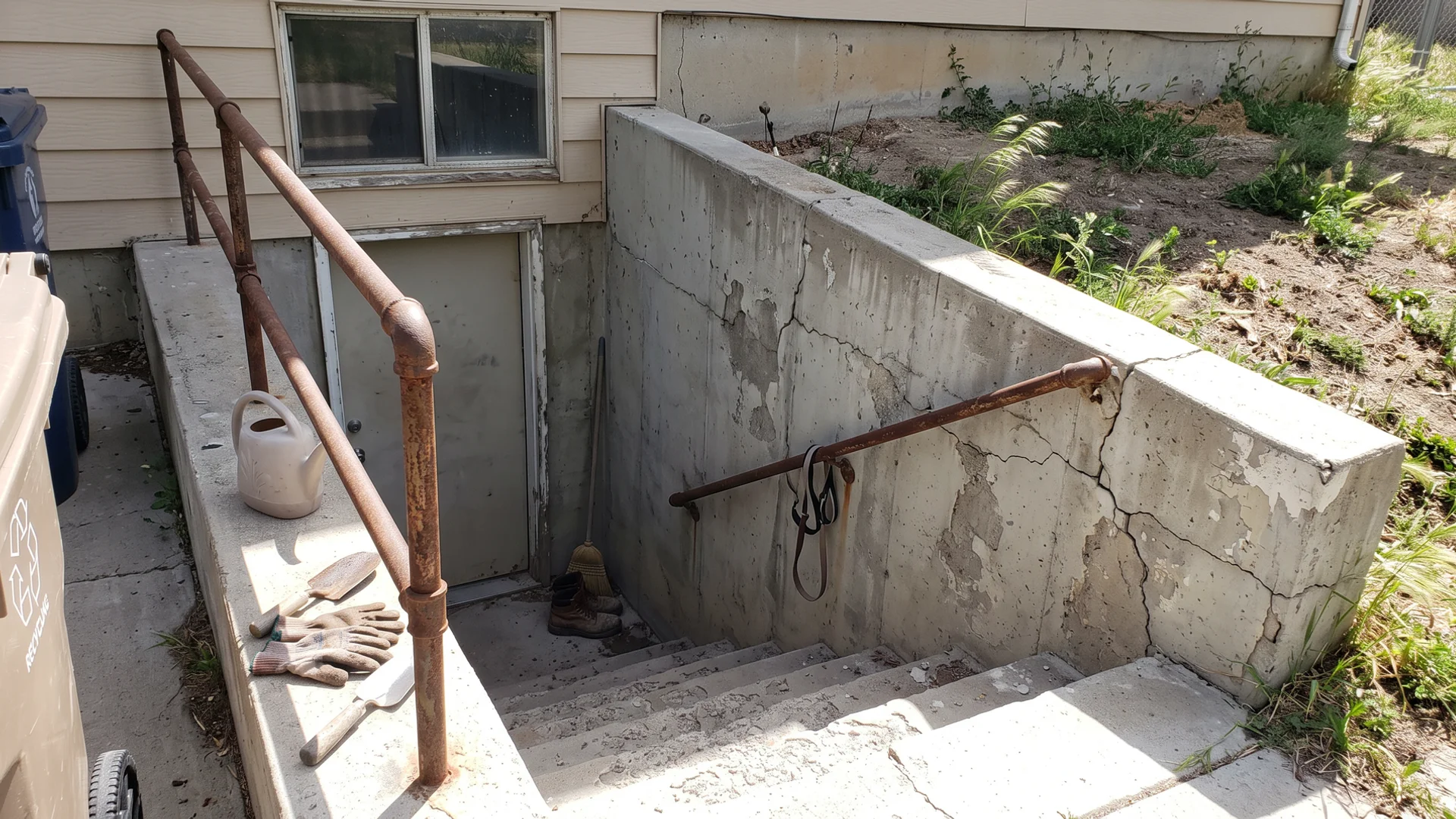
We sometimes find that structural issues dictate the necessary next steps. If walls are cracking structurally, leaning, or spalling, rebuilding the walkout alongside the drainage is usually the better investment. Failing stairs also indicate that a larger update is necessary for family safety.
Our team will explain the reasons clearly and point you to a helpful overview on walkout rebuilds. Your safety and long-term property value always come first. The detailed guide on repair vs rebuild shows exactly how that final decision is made.
What Affects the Cost of Drainage Repair?
We price drainage repairs after an onsite evaluation because the specific scope varies so much from house to house. Several key factors determine the final estimate. The table below breaks down the biggest cost drivers.
| Factor | Effect on scope |
|---|---|
| Existing drain size and access | Small or buried drains usually need replacement |
| Landing removal | Required to install a basin and reservoir under it |
| Sediment source | Eroding beds or grading may need correction too |
| Outlet options | Gravity to daylight vs pump provision |
| Groundwater | Can add perimeter-drain or pumping considerations |
| Wall and stair condition | Structural problems can turn a repair into a rebuild |
Our estimates clearly line out each of these variables for total transparency. Transparent pricing prevents unpleasant surprises later on. You will always know exactly what you are paying for.
When to Call for an Evaluation
We highly recommend calling for help if water pools at your walkout door, or if the drain clogs every single season. Mud constantly washing into the stairwell is another massive red flag. You should also reach out if water seeps at the threshold or you simply cannot see your drain at all.
Our walkout flooding guide covers the safe first steps to take while you wait for assistance. These immediate actions can prevent secondary water damage inside the home. Quick responses always yield the best results.
Fall and spring are the best times to check.
Leaves, winter grit and snowmelt load walkout drains more than any summer storm. Lift the grate, look, and call if what you see worries you.
After the Repair: Keeping It Working
We want to remind you that a beautifully designed system still needs basic routine care to function perfectly. A great pro tip is using a standard wet/dry shop vacuum on the blower setting to quickly clear dry leaves off the grate before a storm hits. This simple trick prevents large debris loads from flushing deeper into the system.
Our walkout drain maintenance guide and the snowmelt and spring runoff guide cover the complete seasonal routine. Every home setup varies slightly, so the final advice is customized directly for your property. Consistent maintenance ensures your investment lasts for decades.
We are ready to answer any questions you have about keeping your property safe. Reach out today to secure your home. Do not wait until the next big storm causes trouble.