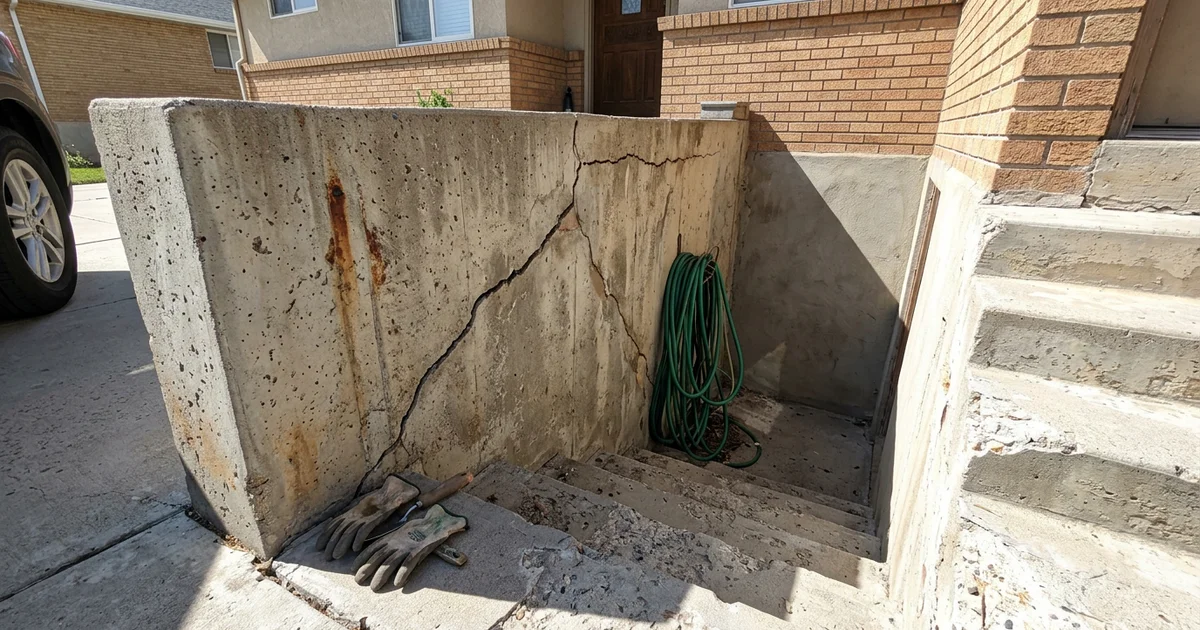
We frequently see property owners assume a damp, stained concrete stairwell is completely ruined. The reality is that looks can be highly deceiving. A wet surface does not automatically mean the foundation is crumbling.
Our initial inspection focuses on one critical distinction. Is the problem structural, or is it strictly a drainage issue where water simply pools at the bottom?
Getting this diagnosis right is how you spend your budget efficiently. Misdiagnose it, and you might mistakenly patch a failure that requires a full basement walkout rebuild, or tear out a solid structure that only needed walkout drainage repair. Let’s break down the signs of each issue and outline the exact repair options.
Two Different Problems That Look Alike
Many people confuse cosmetic surface stains with deep structural failure. A cracked walkout can certainly look like it needs to be torn out. Sometimes that is the unfortunate truth, but often, it is completely salvageable.
We always start by checking the structural integrity of the retaining walls. The key question is whether those walls and stairs are failing under pressure. If the concrete is solid, you likely have a drainage-only problem where water just lacks an escape route.
Knowing how to repair or rebuild basement walkout structures correctly saves massive headaches.
Signs of Structural Failure
Structural failure means the earth around your home is physically moving the concrete. Wet soil exerts massive hydrostatic pressure against below-grade walls. In the US, this force easily pushes thousands of pounds per square foot against your stairwell.
We look for very specific indicators that this pressure has compromised the structure. Here are the primary signs a walkout needs rebuild attention:
- Wall movement. The concrete is leaning into the stairwell, bulging in the middle, or pulling away from the house foundation.
- Walkout wall cracking. You will see wide fissures, cracks that actively grow, or spots where one side of the crack sticks out further than the other.
- Spalling concrete. The surface flakes away, which often happens when winter deicers like calcium chloride attack the finish and expose the steel reinforcement bars.
- Frost damage. Freeze and thaw cycles cause frost heave, lifting and breaking the heavy concrete steps.
- Rotting timber or failing block. You might spot decaying wooden railroad ties, bowed cinder blocks, or stair-step patterns cracking through the mortar joints.
- Unsafe stairs. The steps become steep, heavily uneven, or crumble away entirely.
Signs of a Drainage-Only Problem
Water is stubborn, and it will sit wherever it cannot flow away. When a stairwell floods during heavy spring storms, it looks disastrous.
Our team often finds that the concrete itself is actually in fantastic shape. Here is what a drainage-only issue typically looks like:
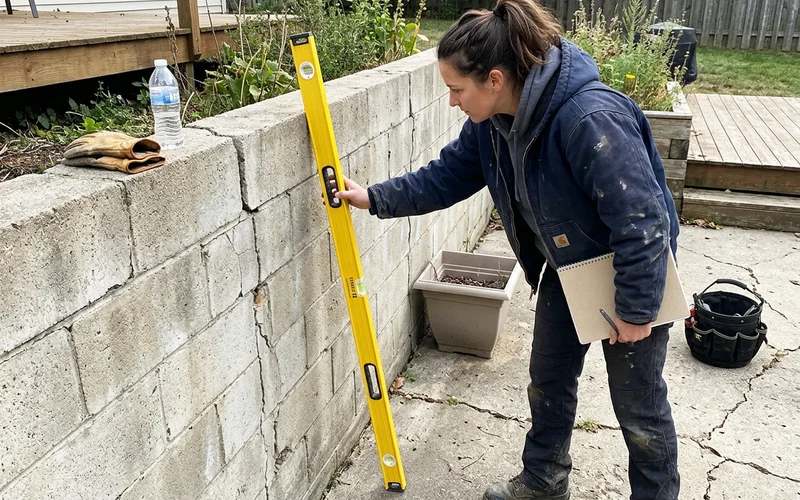
- Plumb and solid walls. The retaining walls stand perfectly straight with no bowing.
- Stable hairline cracks. Any visible cracks are small, do not grow over time, and sit flush on both sides.
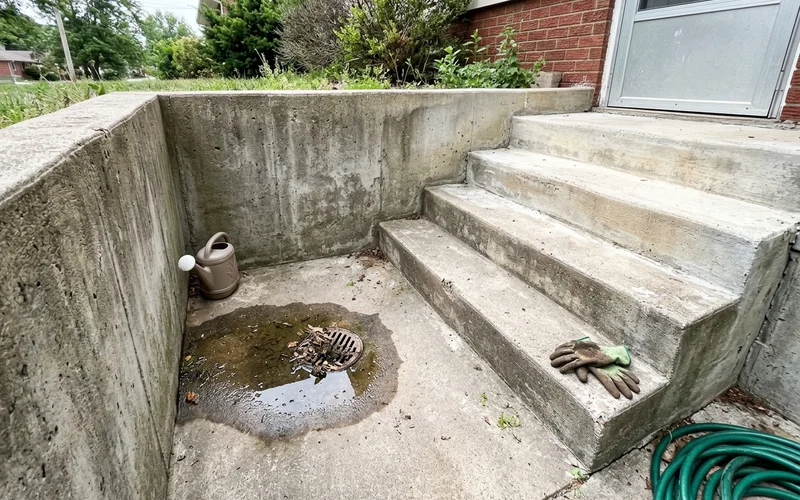
- Storm pooling. Water heavily collects at the bottom landing after heavy rain or snowmelt.
- Inadequate drainage. The existing 4-inch drain pipe is clogged with pine needles, buried under silt, or completely inaccessible.
- Surface runoff. Mud and yard debris constantly wash down the stairs from the lawn above.
Side by Side
Seeing the symptoms next to each other helps clarify the situation. We use these general categories to figure out the right path forward. The final fix always depends on an in-person look.
| What you see | Likely category | Typical fix |
|---|---|---|
| Pooling water, sound walls | Drainage | Drainage retrofit with new catch basin |
| Clogged or tiny drain | Drainage | Install larger basin, add storage, ensure access |
| Mud washing in from above | Drainage and grading | Regrade yard, add top curb, retrofit |
| Hairline stable cracks | Usually cosmetic | Monitor closely, apply surface seal |
| Leaning or bulging wall | Structural | Complete wall rebuild required |
| Growing or offset cracks | Structural | Complete wall rebuild required |
| Spalling with exposed steel | Structural | Full structural rebuild |
| Steep, crumbling stairs | Structural / safety | Engineered stair rebuild |
| Rotting ties or bowed block | Structural | Replace entire walkout |
What a Rebuild Replaces
A true rebuild is a major construction project. It removes the failing materials and installs a brand-new system built to project-specific engineering standards. Modern building codes require high standards, and any US retaining wall over 48 inches tall generally needs proper structural engineering.
We handle the excavation, pour new steel-reinforced footings, and construct walls designed to handle local soil pressure. The project usually includes reconfigured stairs, fresh railings, modern waterproofing like dimple boards, and a high-capacity drainage system. Depending on the design, the existing exterior door might stay, or we can upgrade the opening.
Most failing walkouts have both problems.
Water helped cause the structural damage in the first place. When we rebuild, we always fix the drainage too.
How We Evaluate
Guesswork has no place in foundation repair. Our assessment process relies on precise measurements and careful observation. The team looks at five distinct elements to determine the exact scope of work.
1. Walls
The walls hold back tons of earth. We use laser levels to check for plumb and measure any bowing. Every crack pattern and instance of spalling concrete gets thoroughly documented.
2. Stairs and Landing
Safety is the priority here. The treads must meet modern code requirements for width and depth. We check for tripping hazards, crumbling edges, and structural sinking.
3. Drainage
A tiny pipe cannot handle a torrential downpour. We inspect the drain size, locate the outlet, and check for sediment blockages. A standard 12-inch NDS catch basin is often the target replacement size.
4. Grading
Gravity dictates where the water goes. We measure the slope of the lawn to see if it funnels rainwater straight down your stairwell.
5. Water Behavior
Water leaves evidence behind. We look for water stains, mold growth, and pooling patterns to understand exactly how moisture interacts with the concrete. After this inspection, you get a straight recommendation. We will suggest a drainage repair, a targeted fix, a stair rebuild, or a full rebuild, and provide the exact reasons why.
A Note on Cost
Budget is always a major concern for property owners. A simple drainage retrofit costs far less than a full structural replacement.
Our experience shows that proactive repairs are the smartest financial move. Letting a retaining wall fail completely guarantees a massive, unavoidable bill.
For the 2026 US market, typical project costs break down into these general tiers:
- Targeted drainage fix: Usually runs a few thousand dollars, covering basic catch basins and pipe routing.
- Standard new walkouts: Typically start in the upper teens, easily ranging between $15,000 and $25,000.
- Complex structural rebuilds: Can exceed $30,000 if deep excavation and extensive engineering are required.
Both minor repairs and major rebuilds are priced accurately only after an onsite evaluation.
Monitoring a Crack Before Deciding
Sometimes, a crack sits right on the borderline of needing attention. If you are unsure whether a fissure is actively moving, keeping a simple record helps immensely.
We recommend taking a photograph with a tape measure placed right next to the gap. Mark the ends of the crack with a pencil, write down the date, and check it again after the winter freeze.
The 1/8-Inch Rule:
Professionals consider any crack wider than 1/8 inch (about the thickness of two pennies) to be a structural concern requiring immediate evaluation.
For a highly accurate reading, professionals use an Avongard Tell-Tale crack monitor. This two-piece acrylic gauge mounts over the crack and tracks movement down to the millimeter. Any growth or uneven shifting between the sides is critical information for the evaluation.
Partial Repairs: When They Make Sense
You do not always need to demolish the entire structure. Sometimes one specific section fails while the rest remains rock solid.
We might find a single step cracked by an old impact, or a short wall section damaged by a downspout that has since been rerouted. A targeted repair makes perfect sense in these isolated situations.
If the root cause affects the whole area, like immense hydrostatic water pressure or inadequate original footings, a partial fix will not last. Putting a band-aid on a sinking foundation just delays the inevitable.
What a Targeted Repair Can Include
When the underlying concrete is mostly sound, smaller updates can drastically extend the lifespan of your stairwell. We only recommend these steps when the walls and footings are strong enough to justify the effort.
Common targeted repairs include:
- Drainage retrofits. Installing a modern 12-inch catch basin provides better water storage and easy cleanout access.
- Landing replacement. We can tear out a damaged landing and pour a new one with a proper 1/4-inch per foot slope toward the drain.
- Stair rebuilding. Replacing a few broken steps stops the damage from spreading.
- Yard regrading. Reshaping the soil and pouring a concrete curb at the top of the stairs blocks mud from washing down.
- Railing upgrades. Swapping loose, rusty handrails for secure anchors improves daily safety.
These specific updates provide tremendous value without the price tag of a full demolition.
Get an Honest Assessment
Stop guessing about the safety of your foundation. You deserve clear answers before you spend a dime on construction.
Request a free walkout consultation and send photos of the walls, steps, and the floor drain. We will review the evidence and tell you which problem you really have.