Drainage Is a System, Not a Hole
We know the frustration of a flooded stairwell. When a walkout floods, it is tempting to blame a simple clog and move on.
As a professional service team repairing these systems across the US, we find that walkout drains fail for specific, predictable reasons. Understanding why basement walkout drains fail is the critical first step toward walkout drainage repair that actually lasts.
Let’s explore the failure causes we see most frequently and outline exactly what fixes each one.
1. Small Floor or Shower-Style Drains
Small 2-inch drains cannot handle heavy outdoor rain volumes. We frequently see contractors install standard grates meant for garage floors.
Indoors, that size handles a steady leak perfectly. Outdoors, a heavy thunderstorm can drop water much faster than that small pipe accepts it. A standard 2-inch pipe maxes out at roughly 20 gallons per minute under gravity flow.
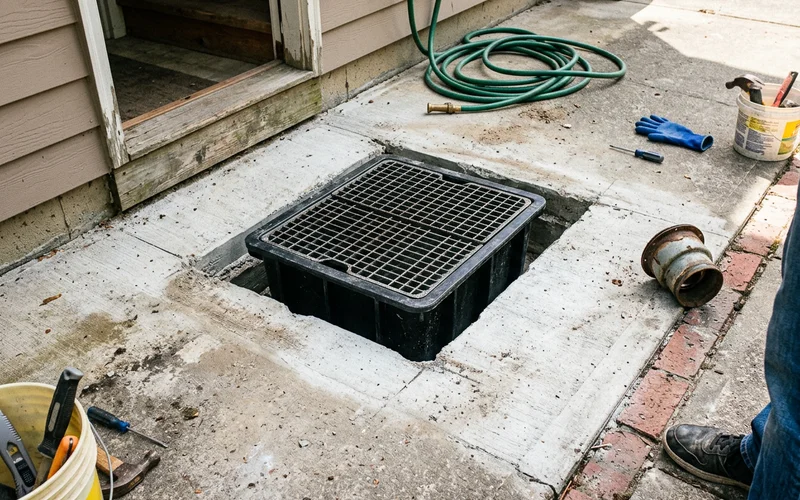
Fix: An accessible catch basin, such as a 9-inch square model, with real volume and storage below it.
2. Insufficient Capacity
Systems fail when there is no underground reservoir for water to wait while it dissipates. We regularly calculate water loads during property inspections.
One inch of rain on a 150-square-foot stairwell generates over 93 gallons of water. Without storage space below the grate, every single gallon must leave as fast as it arrives.
Fix: A reservoir and surrounding washed drain rock. A representative system offers roughly 75 to 100 gallons of combined passive capacity. See how our drainage system works.
3. Sediment, Leaves and Dirt
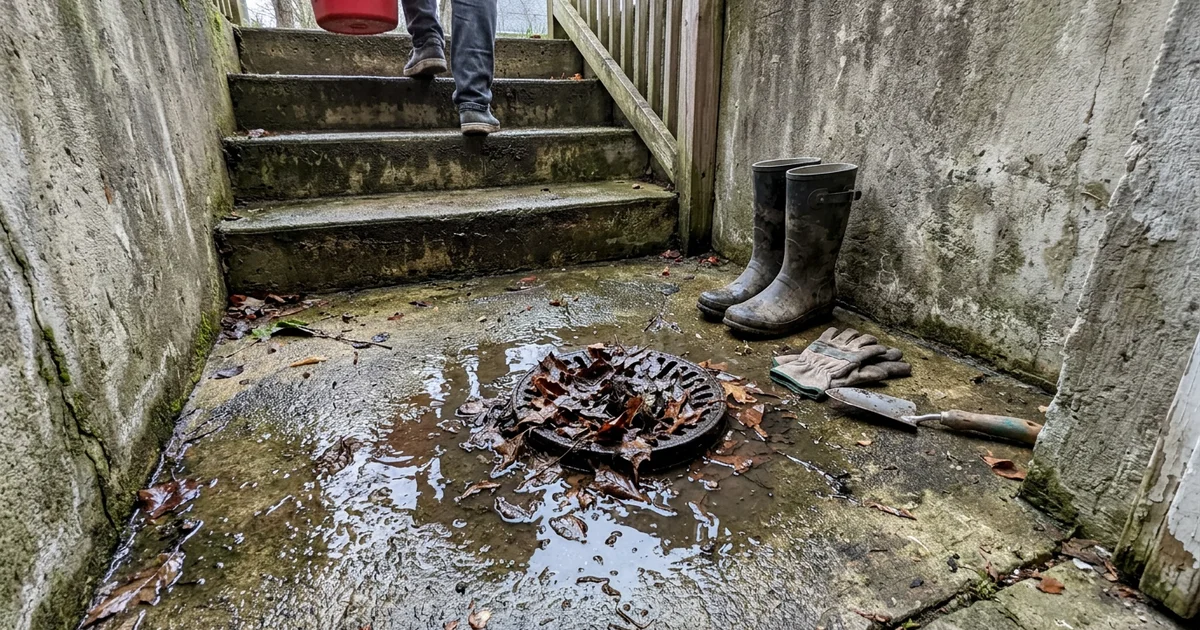
Walkouts sit at the lowest elevation, making them a natural trap for organic yard waste. Our crews pull pounds of decaying matter out of these pits every spring.
Pine needles, grass clippings, and standard wood mulch quickly mat over small grates. This heavy debris completely blocks water entry and packs solidly into the pipes beyond.
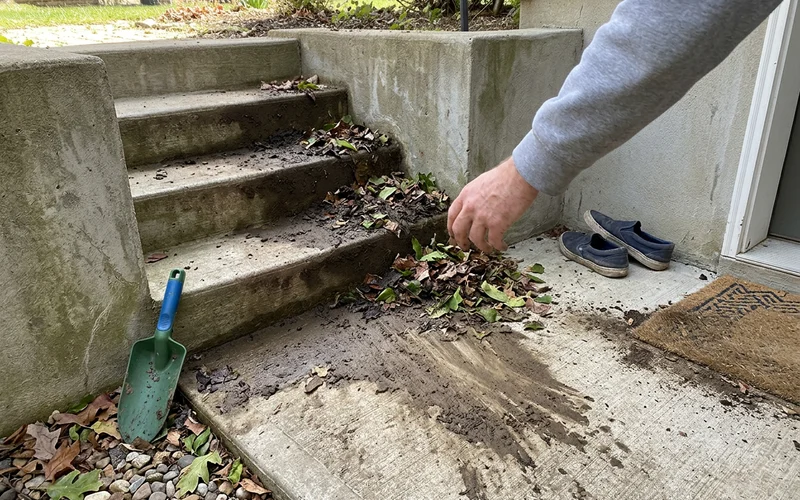
Fix: A basin that catches sediment where you can easily remove it, plus addressing the source of the mess.
4. Landscape Erosion
Bare soil or poorly retained flower beds above the stairwell send steady streams of mud directly into the walkout. We often rebuild systems choked completely by basic garden topsoil.
Fine silt turns a standard gravel bed into a solid block of mud. This daily erosion transforms a functioning pipe into a useless sediment trap.
Fix: Proper grading that slopes away, adding a stair-top concrete curb, and planting deep-rooted ground cover to stabilize beds. See grading around a basement walkout.
5. Inaccessible Drains
A buried or undersized drain hides dangerous debris buildup until water stops moving entirely. We cannot fix a problem we cannot physically reach.
Standard plumber inspection cameras struggle to negotiate blind turns hidden under feet of gravel. By the time you notice a slow drain, your finished lower level might already be wet.
Fix: An accessible basin with a removable heavy-duty grate, so seasonal visual checks take just minutes.
6. Concrete Contamination During Construction
Concrete slurry washed into the drain rock during initial home construction permanently ruins the system’s porosity. We uncover this hidden defect on surprisingly new properties.
Portland cement binds the surrounding gravel together, creating a solid, waterproof block right where water needs to flow. The walkout is functionally compromised before anyone even uses it.
Fix: Retrofitting the entire drainage bed. On new builds, contractors must protect drainage components with physical barriers during every single concrete pour.
7. Poor Grading
Funneling surface yard water toward the stairwell overwhelms any standard passive drain. We find many properties violating basic US building standards.
The International Residential Code requires the ground to drop 6 inches in the first 10 feet away from the foundation. When the yard pitches the wrong way, the stairwell becomes a neighborhood retention pond.
Fix: Regrading the turf so water flows away, combined with a raised edge at the top of the stairwell.
8. High Groundwater
Saturated soils push water up from below, bypassing the surface grate entirely. Our site evaluations often reveal water pooling even on perfectly dry, sunny days.
Hydrostatic pressure forces deep groundwater through invisible cracks in the concrete walls and landing. Surface pipes simply cannot fight an elevated water table.
Fix: Professional site evaluation, perimeter drain consideration, and supplemental pumping where appropriate. See high groundwater and walkouts.
9. Poor Maintenance
Even expertly designed setups fail if routine cleaning is ignored. We strongly recommend a quick inspection after the last autumn leaves fall.
A standard wet-dry shop vac easily pulls out most surface debris, but only if the grate is clear. Often, maintenance stops because the original cap is secured tightly or covered in heavy decorative rocks.
Fix: Accessible design and a simple seasonal routine. See walkout drain maintenance.
10. No Supplemental Pumping Option
Extreme rain events will exceed the capacity of any passive gravity design. We always plan for the worst-case weather scenario.
Intense flash floods are increasing across the US, requiring active mechanical help. A system with no backup pump has nowhere for rising water to go when a walkout drain backing up threatens the door.
Fix: Designing the basin so a temporary or permanent 1/3 horsepower submersible pump can drop right in during extreme conditions.
| Failure cause | Symptom you’ll notice | Typical fix |
|---|---|---|
| Small drain | Pooling in heavy storms | Accessible catch basin |
| No storage | Fast backups | Reservoir and drain rock |
| Sediment and debris | Repeated clogs | Basin plus source control |
| Erosion | Mud in stairwell | Grading, curb, bed stabilization |
| Inaccessible drain | Surprise floods | Accessible basin |
| Concrete contamination | Slow from day one | Rebuild the drainage bed |
| Poor grading | Lots of inflow | Regrade away from walkout |
| Groundwater | Water without rain | Perimeter drain, pump provision |
| No backup | Overflow in extremes | Pump provision |
Most failures stack.
A small drain plus an eroding bed plus no access is how a walkout floods every spring. Fixing one cause helps. Fixing the system solves it.
Clean It or Upgrade It?
A single clog from a freak storm might just need a basic cleaning, but repeated flooding means you need a serious upgrade. Our technicians look at the frequency of your basement stairwell drain problems to decide the best path forward.
Professional hydro-jetting clears temporary mud, but undersized pipes will always fail again. If your walkout drain clogged every spring season, the pipe is likely undersized or completely inaccessible. See clear the clog or upgrade the system.
How These Causes Combine in Real Walkouts
Walkout drain failures usually result from a compounding mix of bad design, dirt, and poor access. We rarely encounter a residential site with just one isolated issue.
A typical failing walkout follows a very predictable pattern of deterioration:
- A small 2-inch floor drain installed during original construction.
- Pipes choked with concrete residue from the original foundation pour.
- Excess runoff fed by a mulch bed that erodes every major storm.
- Zero physical access to see inside the actual basin.
This setup works for a few years. Then every spring, the landing inevitably floods.
Another common pattern involves a decent-sized grate with zero underground storage, placed right where the roof downspout empties. Summer rain is fine, but a fast spring snowmelt completely overwhelms the pipe.
Fixing only the most visible symptom helps until the next heavy weather event. Fixing the entire system means looking at capacity, access, sediment sources, grading, and the outlet together.
Questions We Ask During an Evaluation
Our diagnostic process starts with gathering historical facts from the property owner. The answers help pinpoint exactly why basement walkout drains fail on your specific property.
- When does water show up: during storms, rapid snowmelt, or randomly without rain?
- How fast does the landing actually drain afterward?
- What specific debris do you find when you clear the grate?
- Has the yard grading or landscaping changed since the walkout was built?
- Where do the primary roof downspouts discharge?
- Can you visually see or reach into the pipe at all?
Your specific answers combine with our onsite measurements to point directly to the real causes.
Preventing These Failures on New Walkouts
New construction allows builders to design out these physical vulnerabilities from day one. We design against every single cause on this list when planning modern builds.
Proper installation includes an accessible basin, real water storage volume, clean gravel beds, and correct yard grading. Using 4-inch Schedule 40 PVC pipes ensures long-term reliability.
A gravity outlet is always preferred, but we include pump provisions where appropriate. See basement walkout installation.
The Cost of Ignoring a Failing Drain
Delaying maintenance turns an outdoor puddle into thousands of dollars in indoor property damage. Our repair crews see the financial aftermath of ignored warnings regularly.
According to FEMA estimates, just one inch of floodwater in a finished home can cause up to $25,000 in damages. A puddle at the back door can seem like a minor nuisance initially.
Over time, water pressing against the threshold damages hardwood flooring, drywall, and personal belongings. Constant moisture contributes to black mold and adds severe freeze-thaw stress to the exterior concrete landing. Addressing the root cause early is always significantly cheaper than dealing with full structural water damage later.
Get the Cause Diagnosed
A proper diagnosis stops the cycle of temporary fixes. We evaluate your drain size, sediment loads, physical access, yard grading, and deep groundwater clues.
This thorough inspection lets us recommend the exact permanent fix that matches your property. Understanding why basement walkout drains fail gives you the power to protect your home.
Request a drainage evaluation to secure your property today.