If Your Walkout Is Flooding Right Now
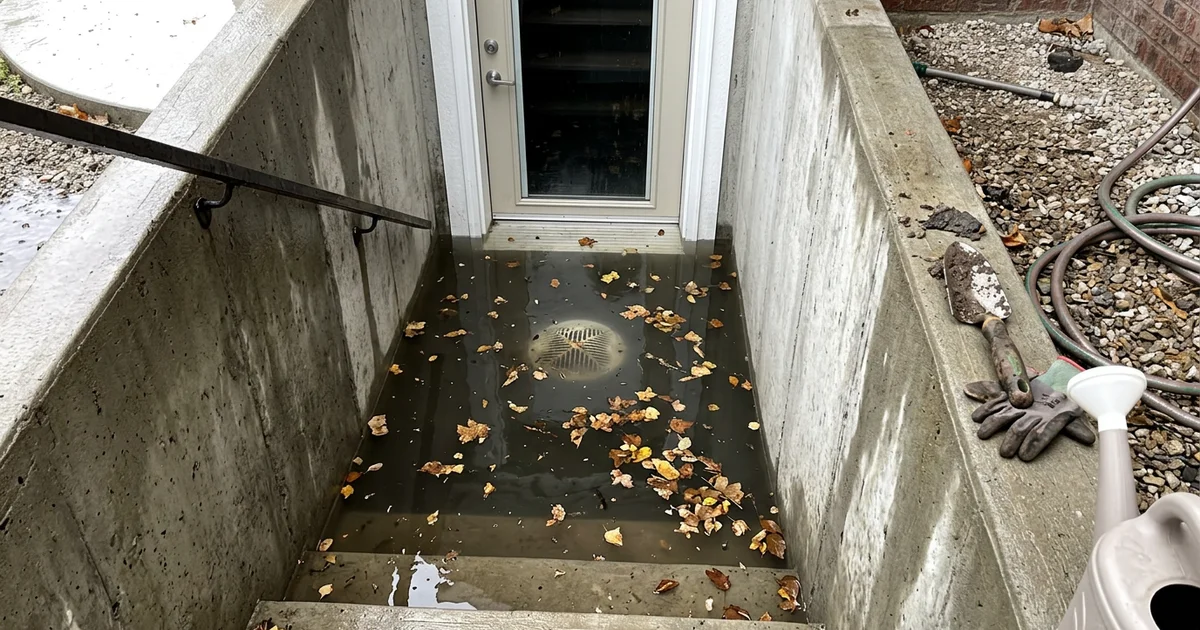
If water is pooling outside your basement door right now, your priority is stopping it before it destroys your interior. We see basement walkout flooding constantly, as nearly 98% of basements in the US will experience some form of water damage over their lifespan.
Safety comes first.
A few simple steps can limit the damage and make the eventual fix much faster. Once the standing water is gone, the next step is diagnosing the exact cause. We designed our walkout drainage repair evaluation to figure out exactly why the system failed.
Safe First Steps
Shutting off the power is your most critical first move when facing a flood. We always instruct property owners to avoid standing water entirely if it touches outlets, lights, or plugged-in appliances. The risk of electrical shock is severe. Our crews follow strict guidelines requiring N-95 masks and rubber gloves before handling floodwater. You should protect yourself similarly, as standing water quickly turns into a breeding ground for bacteria.
- Watch for electrical hazards. Keep clear of the area until the main breaker is off.
- Wear protective gear. The EPA recommends rubber gloves and N-95 masks to avoid contaminated gray or black water.
- Clear the drain safely. Pull leaves and debris off the grate if you can reach it without submersing your bare hands.
- Block the door. Towels or a temporary barrier at the threshold buy you valuable time.
- Document everything. Take photos and videos for your insurance claim, noting water height and weather conditions.
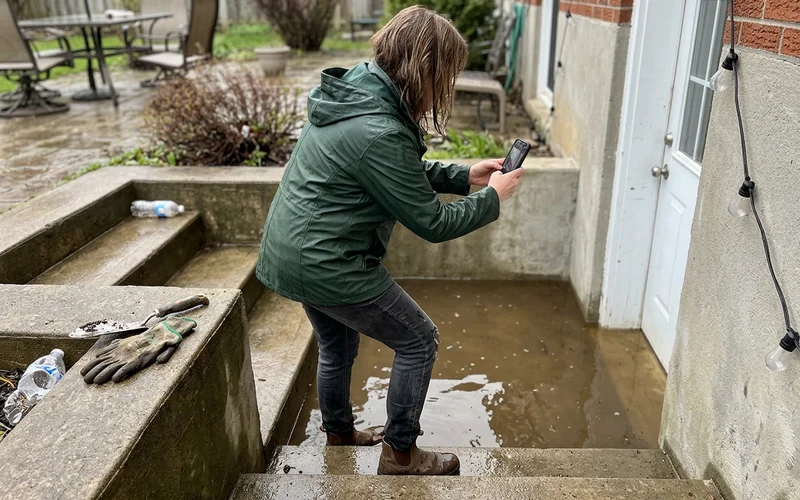
That record is genuinely useful for filing claims and planning repairs. Patterns point to causes.
Symptom-to-Cause Triage
Most walkout stairwell flooding traces back to one of four specific failure points. We use these exact symptoms to start sorting out the root cause. Finding the right fix depends entirely on what you see happening during a storm.
The Drain
If water pools during storms and drains slowly afterward, the primary exit route is failing. We often see walkout landing drains clogged with sediment or completely overwhelmed by heavy rain. Current US plumbing codes often require a 4-inch minimum pipe for below-ground drains, but many older homes still rely on outdated 2-inch pipes. That smaller diameter simply cannot handle modern storm volumes.
Grading and Inflow
Mud, mulch, or leaves in the stairwell after rain indicate that surface water is pouring over the top edge. We frequently fix yards that slope directly toward the walkout, turning the stairwell into a funnel. Fixing the exterior grade is usually much cheaper than paying the national average of $3,867 for US water damage restoration.
Groundwater
Water appearing without rain points directly to hydrostatic pressure. We spot this when seepage occurs at wall joints or right through the slab during wet seasons. FEMA data shows that one in four flood insurance claims actually comes from low-to-moderate risk areas, often due to this invisible groundwater pressure.
The Door Threshold
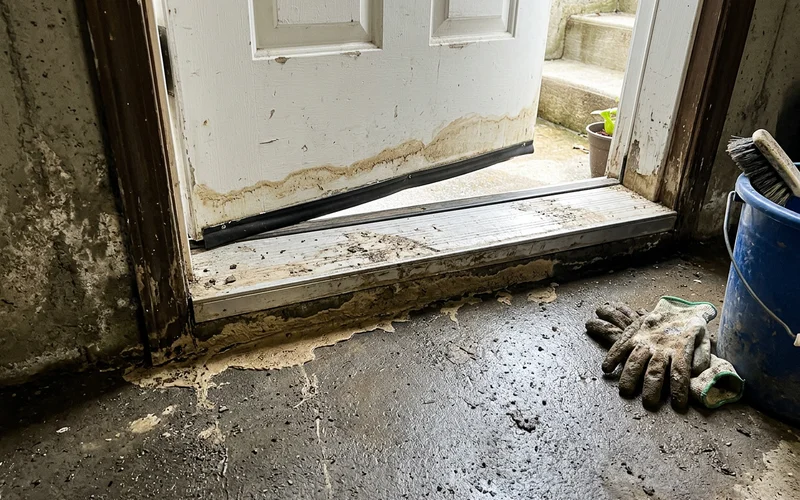
If the basin is mostly dry but water creeps under the door, your landing slope is the culprit. Our installers often find landings that tilt toward the threshold instead of pitching away toward the drain.
| What you see | Likely cause | What helps |
|---|---|---|
| Pooling in big storms | Drain capacity | Basin and storage |
| Mud in the stairwell | Grading, erosion | Regrade, curb, beds |
| Water without rain | Groundwater | Evaluation, pump provision |
| Water under the door only | Landing slope, threshold | New landing, threshold detail |
For the full list of failure mechanisms, read why basement walkout drains fail.
Spring floods are a clue too.
If your walkout floods mostly during snowmelt, capacity and debris are prime suspects. See our snowmelt guide.
Repair or Rebuild?
Deciding between a repair and a full rebuild depends on the structural integrity of your walls and stairs. We usually handle flooding by retrofitting a better drainage system into the existing footprint. A rebuild becomes necessary when the concrete walls are leaning, cracking structurally, or the stairs are actively failing.
According to 2026 industry data, severe black water flooding and structural damage can cost upwards of $15,000 to remediate. We advise clients that investing in a complete overhaul is more cost-effective than paying for repeated interior cleanups. Rebuilding the structure and the drainage system at the same time guarantees a dry space. See basement walkout rebuilds.
After the Water’s Gone
Cleaning up the aftermath requires careful action to prevent secondary damage. We recommend starting with the easiest debris before tackling the interior moisture.
- Clean out what sediment you can reach without flushing it deeper into the pipe.
- Dry the area inside near the door immediately and watch for lingering moisture.
- Keep your photos and notes for the insurance adjuster.
- Do not wait for the next storm to find out if the problem is fixed.
More on seasonal water in snowmelt and spring runoff in walkout stairwells.
What Not to Do
Making the wrong move during a flood can cause severe structural damage or physical harm. We see property owners make costly mistakes by rushing the cleanup process.
- Don’t pump water out all at once. The American Red Cross and FEMA strictly advise pumping out only about one-third of the water per day. Removing water too fast causes external soil pressure to collapse your basement walls.
- Don’t stand in water near electrical.
- Don’t pressure-wash sediment. Hosing large amounts of dirt into the drain simply pushes the blockage deeper.
- Don’t seal the door with caulk. Expanding foam or caulk traps the water and fails to address the root cause.
- Don’t assume a dry month means a fix. The next big storm or snowmelt will test the system again.
Protecting the Inside
Getting the interior dry within the first day is crucial to saving your floors and walls. We prioritize fast extraction because clean water quickly degrades into contaminated gray water if left sitting.
Pull back rugs, move belongings off the floor near the door, and run high-capacity fans or a dehumidifier. The EPA warns that mold begins growing on damp surfaces within just 24 to 48 hours. We always check drywall and baseboards for wicking, as lingering moisture leads to severe odors and expensive tear-outs. Do not let any damp materials sit untreated.
When It Floods Only at the Door
If your main drain handles the storm but you still find water at basement walkout door thresholds, the physical entry point needs adjustment. We frequently install specific solutions for this isolated issue.
The culprit may be a flat landing slope, a degraded weather seal, or how the door frame meets the concrete opening. A high-capacity trench drain is often placed right across the doorway to intercept surface water. We treat this as a separate fix from adding main drainage capacity, and it is worth diagnosing carefully before spending money.
Get an Evaluation
Identifying the exact source of your basement walkout flooding is the only way to design a permanent solution. We will look at the drain, sediment, grading, the landing, waterproofing, the outlet, and groundwater clues.
The right evaluation pairs those clues with a fix that perfectly matches your specific site conditions. Request a drainage evaluation and send along those photos you took during the storm.