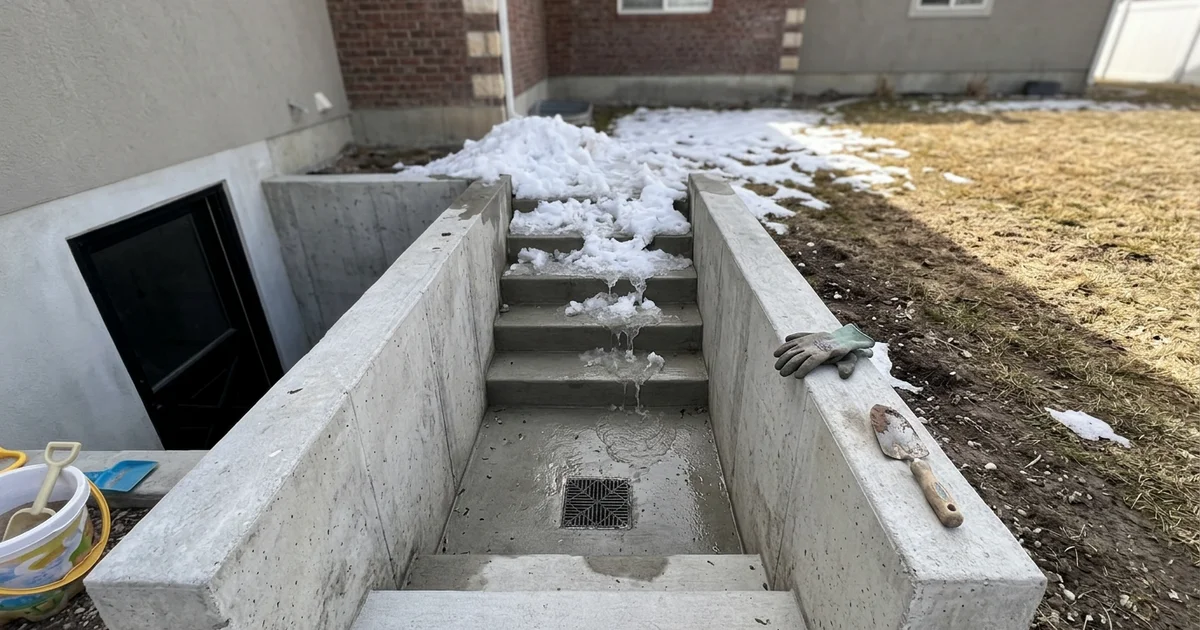
You likely know the feeling of watching a rapid spring thaw send sheets of water directly toward your basement door. Our team sees this exact scenario play out constantly across local properties. A quick summer thunderstorm passes in an hour, but sustained walkout stairwell snowmelt delivers relentless water volume to the lowest point beside your house.
Weeks of shoveled snow can liquefy in just a few warm days.
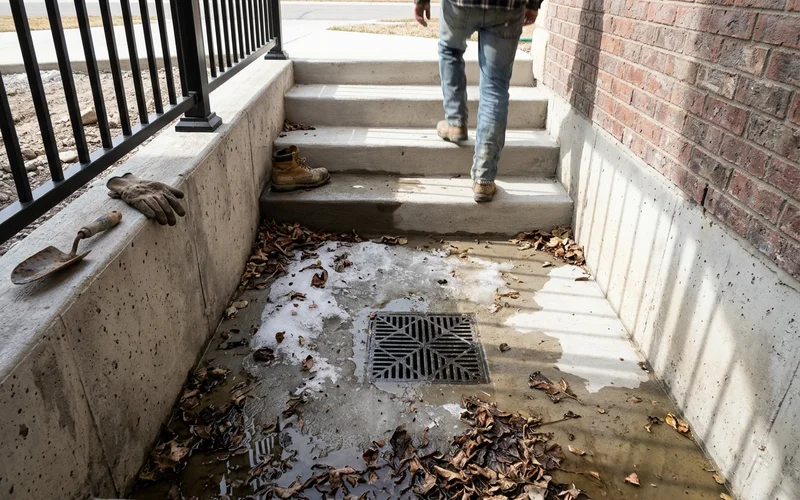
We find that a small drain, clogged with last fall’s leaves or capped by overnight ice, quickly forces that runoff right back against your threshold. That is exactly why seasonal water buildup is a top reason homeowners call us for walkout drainage repair every March and April. Let us look at the data behind these heavy spring flows and explore practical ways to protect your property.
Why Utah Winters Are Hard on Walkout Drains
We know that local climate patterns create a perfect storm for basement flooding. Salt Lake City alone experiences an average freeze-free period of just 167 days. This leaves nearly 200 days of the year where nighttime temperatures can drop below freezing.
Our crews frequently handle calls where daytime melting and nighttime freezing completely seal off exterior stairwell drains. Ice blockages act like concrete plugs during the most critical runoff periods.
We recommend treating your exterior stairwell as a high-risk zone during these temperature swings. The constant cycling between 40-degree afternoons and 20-degree nights requires a highly functional water management setup.
What Happens in Winter and Spring
Spring introduces a unique set of challenges that overwhelm standard residential grates. We categorize these seasonal threats into three main areas of concern.
Surge Volume
Snowmelt delivers more water, faster, than many basic setups were sized to handle. Our experience shows that the bigger the snowpack near the stairwell, the larger the resulting surge.
The Wasatch Back region sees this effect magnified significantly. Mountain communities like Midway receive an average of 23 to 27 inches of snow during core winter months like January and February. We often see higher elevations around Sundance Resort absorb up to 265 inches annually.
This massive volume releases rapidly during the May and June spring runoff timeline. We must emphasize that a standard 4-inch drain pipe simply cannot process this much concentrated flow.
Freeze/Thaw
Water that melts in the afternoon refreezes overnight, glazing the grate, the landing, and the steps. Our winter service calls frequently involve heavy ice dams forming directly over the primary outlet.
A solid sheet of ice completely blocks the drain right when the next morning melt arrives. We observe that these repeated freeze and thaw cycles also cause micro-cracking in the surrounding concrete.
Winter Debris
Leaves missed during fall cleanup, grit from walkways, and soil from bare garden beds all wash down with the meltwater. Our recent research into US drainage statistics shows that a grate blocked by 90% reduces overall water flow efficiency by nearly 20%.
Even a partial blockage causes severe backups during peak flow periods. We constantly remind property owners that keeping the area clear is just as important as the pipe size itself.
| Season | What loads the drain | What to do |
|---|---|---|
| Fall | Leaves, landscape cleanup | Clear landing, check basin |
| Winter | Snow piles, ice | Keep snow away from the stairwell edge |
| Early spring | Rapid melt, debris | Check basin after melts |
| Spring runoff | Sustained flow | Watch for pooling at the door |
How Capacity and Access Help
A system designed for high capacity gives meltwater a secure place to wait while it slowly drains away. Our standard recommendations for upgrading basin capacity include:
- Residential Basins: A 9-by-9-inch basin rated for 20 to 40 gallons per minute (GPM) works for standard yards.
- High-Runoff Basins: A heavy-duty 18-by-18-inch high-density polyethylene (HDPE) basin processes 70 to 140 GPM for larger walkouts.
- Passive Storage: Pairing a 12-by-12-inch basin with proper drain rock provides 75 to 100 gallons of passive water capacity.
We explain exactly how our drainage system works to handle these peak surges.
Accessibility matters just as much as raw volume. Our technicians always install liftable grates so you can physically see ice or debris and clear it before the next warm day.
Where you pile snow matters.
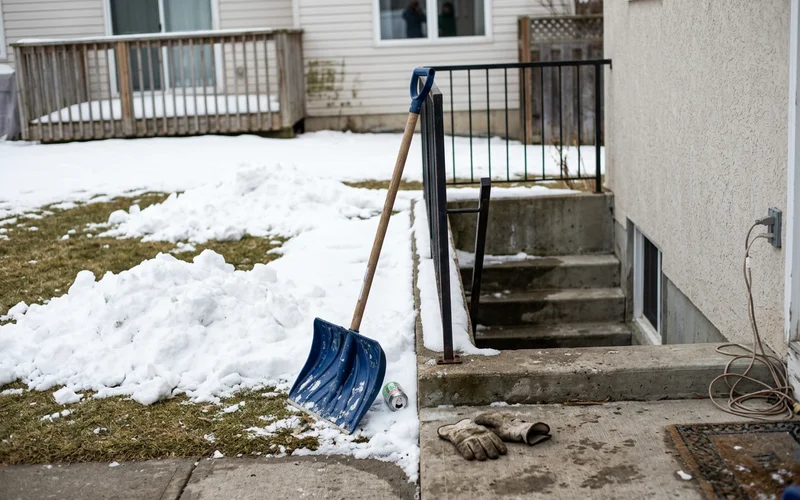
Don’t shovel snow into the stairwell or pile it right at the top edge. Every pile near the walkout becomes water at the bottom of it.
A Simple Post-Winter Routine
Routine inspections save thousands of dollars in emergency restoration costs. We advise property owners to follow a specific checklist to keep water flowing freely.
- After the first big melt, look at the landing to see if water is moving to the drain or sitting by the door.
- Lift the grate and check the interior for ice, leaves, and sediment buildup.
- Remove debris by hand or with a small garden trowel.
- Avoid flushing large sediment loads deeper into the piping, as this clogs the underground lines.
- Look above the stairwell for eroded beds or bare soil contributing to the mess.
- Repeat this entire process during the heavy May and June spring runoff.
These individual steps vary slightly depending on your specific setup. Our complete, step-by-step routine is detailed in how to maintain a walkout drain.
Design Details That Help in Snow Country
Smart structural choices make a massive difference when dealing with heavy snowpack. We focus on specific architectural features that naturally divert water away from your foundation.
Following the 2026 Utah egress window well codes ensures your setup meets both safety and drainage standards. Our local inspectors look for window wells that provide a minimum of 36 inches of horizontal projection and at least 9 square feet of floor area.
These required dimensions create enough physical space to install high-capacity water management solutions. We highly suggest incorporating the following design elements into your property layout.
- Sloped Concrete: Stairs and landings must slope away from the door so melt drains directly into the basin instead of puddling and refreezing.
- Stair-Top Curbs: Proper yard grading and a concrete lip at the top of the stairs keep surface yard melt from cascading down the steps.
- Gravity Outlets: Routing the pipe to daylight, rather than a sump pump, provides reliable performance even during power outages.
- Supplemental Pumps: Adding an automated pump provides a critical safety net where gravity outlets are physically impossible.
- Solid Railings: Sturdy handrails offer essential safety on icy mornings.
Why the Wasatch Back Sees Bigger Surges
Geography dictates the severity of your spring thaw experience. We operate extensively in mountain communities like Heber City, Midway, and Park City, which sit at higher elevations.
Midway rests at approximately 5,500 feet above sea level, allowing it to hold significantly more snow for much longer than the Salt Lake valley floor. Our crews prepare for massive volume spikes when that deep mountain snowpack finally releases.
The total volume reaching a walkout in these areas lasts longer and peaks aggressively. We see even greater surges in stairwells positioned near specific high-risk zones:
- Directly beneath steep roof edges
- At the bottom of sloped driveways
- Next to massive, plowed snow piles
If you live on the Wasatch Back, upgrading your basin capacity and ensuring easy grate access is absolutely critical. We cover these regional challenges extensively on our Wasatch Back area page.
Roof Snow and Walkouts
Overhead hazards contribute drastically to ground-level flooding. We constantly find that snow sliding off a metal roof onto the walkout concentrates a massive amount of melt in one single spot.
A poorly placed downspout emptying near the stairwell acts like a firehose during a rainstorm. Our initial inspections always include a thorough look at what sits directly above your walkout area.
Redirecting downspouts using standard 4-inch or 6-inch corrugated pipe adapters easily cuts the load on the ground drain. We help homeowners install snow guards on their roofs to prevent dangerous avalanches from burying the stairwell.
When Ice Is the Problem
Having a walkout drain frozen solid stops water from reaching the basin, even if the pipe below is completely clear. We recommend clearing fresh snow from the landing immediately to keep the metal grate exposed to the sun.
Making sure the landing slopes directly to the drain prevents small puddles from sitting and freezing solid overnight. Our technicians strongly warn against aggressively chipping at thick ice on the concrete or the plastic grate.
Heavy impacts easily crack high-density polyethylene basins and cause permanent damage to the surrounding masonry. We provide professional evaluations to analyze the following factors:
- Proper landing slope degrees
- Daily sun exposure levels
- Overall drainage pipe capacity
A specialized outdoor heated mat is sometimes necessary for deep, shaded stairwells. We find that preventing the ice from forming is always cheaper than repairing a cracked foundation.
Planning a Spring Fix
Timing your repairs correctly saves you from fighting muddy, frozen ground. We consider late summer or early fall the absolute best time to plan a permanent fix, right before the next winter snowpack builds.
Drainage retrofits involve heavy excavation and pouring new concrete. Our scheduling team finds that these specific trades are much easier to book outside of the coldest winter months.
National statistics highlight the financial risk of waiting:
- 98% of US basements will experience water damage during their lifespan.
- $4,250 is the average water damage restoration cost per incident.
We want to help you avoid becoming part of that statistic. A proactive retrofit costs a fraction of the price of a major disaster cleanup.
Floods Every Spring?
A stairwell that floods every single runoff season sends a very clear message. We view repeated water intrusion during a spring runoff basement walkout emergency as proof that the current setup lacks the necessary physical capacity.
Ignoring the problem only guarantees a more expensive cleanup next year.
Our team is ready to design a permanent, high-capacity solution for your property. Please request a drainage evaluation with us today, ideally before the next winter freezes the ground.