You know how frustrating it is when a client wants a new walkout, but the site seems permanently damp. We see this all the time.
A high groundwater basement walkout creates unique challenges that stall projects before they even begin. Saturated clay soil can exert over 60 pounds of hydrostatic pressure per square foot against concrete walls. That constant pressure is the real culprit behind most failed foundation updates.
A proper walkout drainage repair assessment separates a successful project from a flooded disaster.
Let us look at the data behind these wet sites. The following steps outline exactly how to handle a high water table effectively.
Water From Below, Not Just Above
Most walkout water problems come from above. Rain, snowmelt, and runoff easily collect at the bottom of the stairwell.
Groundwater is an entirely different beast. We know it moves through the soil and presses against walls and slabs from below. This happens whether or not it is raining outside. In many US residential zones, the water table sits just 3 to 5 feet below the surface.
This constant presence does not usually rule out a walkout. It simply changes how the drainage system must be designed. Our team looks at groundwater patterns during every new walkout feasibility visit.
Signs Groundwater May Be Involved
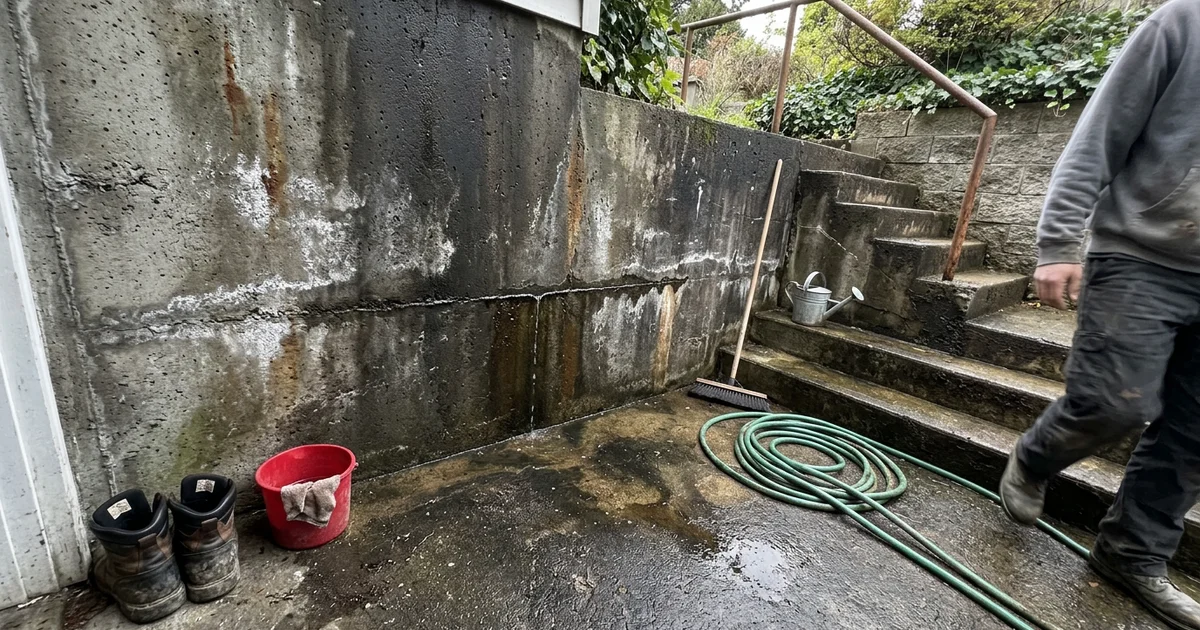
You need to know what physical signs point to a high water table. We look for continuous seepage, white mineral deposits, and deteriorating concrete around the base.
One common indicator is efflorescence. This white, powdery deposit appears on concrete walls when water evaporates and leaves soil salts behind. Our inspections also frequently reveal cove joint seepage. This happens when water forces its way up through the specific seam where the basement wall meets the floor slab.
Concrete spalling is another severe warning sign. Prolonged moisture causes the concrete to soften, flake, and eventually crumble away.
- Water in the stairwell or at the door without recent rain
- Seepage at wall joints, cracks or where the slab meets the wall
- Damp walls or slab that stay wet for days
- A basement sump that runs often
- Problems that linger through wet seasons, not just storms
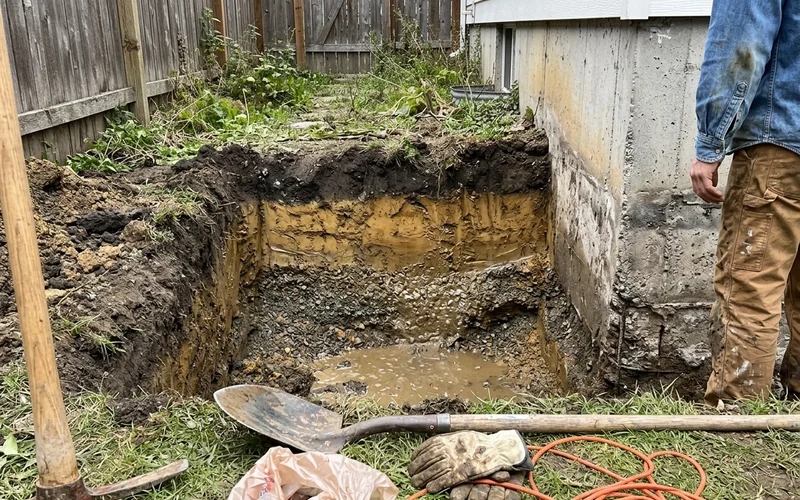
- Wet soil layers seen during excavation
- White efflorescence or spalling concrete on foundation walls
| Clue | Surface water | Groundwater |
|---|---|---|
| Timing | During or right after storms | Can appear without rain |
| Location | Pools on the landing | Seeps at joints and slab |
| Duration | Drains away | Lingers |
| Seasonality | Storms, snowmelt | Wet seasons |
These are clues, not a final diagnosis. An onsite evaluation confirms what is actually going on underground.
How Groundwater Changes the Design
Groundwater forces a redesign to relieve hydrostatic pressure before it reaches the structure. We adapt by adding perimeter drains, stronger waterproofing, and high-capacity pumps.
Perimeter-Drain Consideration
Where groundwater is present, a specialized groundwater walkout drain around and behind the walkout walls requires serious consideration. You cannot just focus on the lower landing area. The primary goal is to relieve water before it builds pressure against walls and the slab.
We typically recommend an exterior perimeter system to intercept water early. Average US costs for full exterior French drains range from $8,000 to $25,000. This investment is crucial for long-term stability. A proper setup utilizes washed gravel and a geotextile filter fabric. This combination prevents silt from clogging the perforated pipes over the years.
Waterproofing
Waterproofing on the retaining walls becomes even more important as a primary layer of protection. We never rely on basic paint-on sealers for these high-pressure situations. Standard paints simply peel and fail when facing constant hydrostatic pressure.
Elastomeric membranes or crystalline waterproofing products offer a much better defense. These specialized materials expand to fill microscopic pores in the concrete. See our detailed guide on walkout waterproofing for specific product recommendations.
Supplemental Pumping
Gravity drainage to daylight is not always possible on flat US properties. Groundwater may simply keep supplying water faster than a passive pipe can remove it. Where appropriate, a walkout system must include provisions for supplemental pumping.
We always specify a high-quality, 1/2 horsepower cast-iron sump pump for these sites. A heavy-duty pump easily handles the water volume that passive capacity cannot. You also need a dedicated battery backup system. Severe storms frequently knock out grid power exactly when the groundwater rises the fastest.
Capacity Still Matters
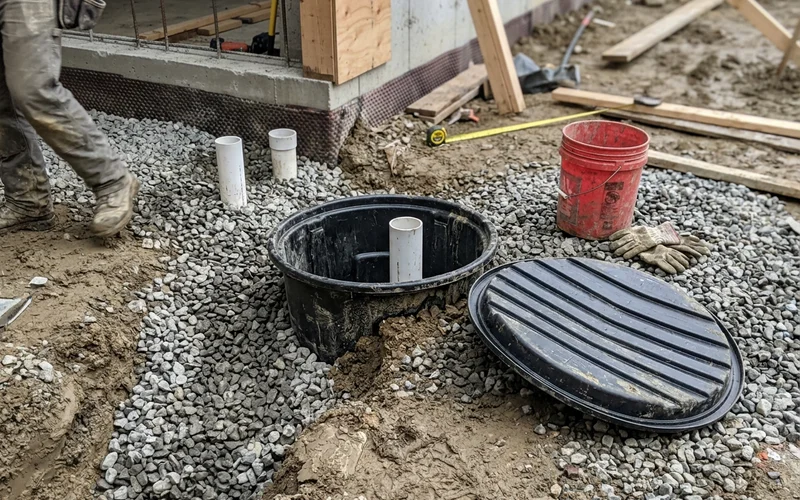
Even with groundwater issues, surface water still arrives rapidly during heavy storms. You have to design the layout to handle both threats simultaneously. A standard 12-inch catch basin might handle normal rain, but wet sites demand much larger storage.
The accessible catch basin, oversized reservoir, and drain rock of our drainage system still do their job. We make sure the system holds enough volume to prevent bottlenecks.
Our process relies on evaluation, not assumption.
Groundwater levels vary heavily between neighboring lots. Our team inspects your specific site instead of relying on broad regional assumptions.
What We Don’t Do
Dedicated drainage solutions remain our strict focus. We handle pumping and perimeter drainage as specific parts of a complete walkout design.
Many general contractors attempt to do everything, but specialized problems require focused expertise. Our technicians do not offer standalone sump-pump installation or whole-basement waterproofing.
If your entire home needs encapsulation, you should hire a dedicated indoor waterproofing company.
Why Groundwater Changes Seasonally
Groundwater levels rise and fall based on annual precipitation patterns. We see the highest water tables during early spring snowmelt and heavy late fall rains.
A walkout water table often stays completely dry most of the year, showing sudden seepage only during these specific seasons. Our crew looks closely at local weather patterns to understand these shifts.
Soil saturation limits mean a single inch of heavy rain can actually raise the underground water table by several inches. Noting exactly when water appears helps us separate deep groundwater issues from simple storm runoff.
Timing is everything.
Tracking exactly when your basement shows moisture helps us accurately diagnose whether you are fighting surface rain or deep groundwater.
What an Evaluation Looks For
An evaluation determines the exact source of water intrusion and tests the site’s grading. We use soil tests, laser levels, and a visual inspection checklist to find the failure points.
A thorough inspection requires more than just a quick visual glance. Our specialists rely on specific tools to pinpoint the exact failure points.
- Where water enters: through the slab, at wall joints, or only at the landing
- Whether it appears without rain
- How the basement sump behaves, including its cycle frequency
- The condition of existing waterproofing and concrete walls
- Whether gravity drainage to daylight is physically possible on the lot
- The current discharge line distance (it needs to be at least 10 feet from the foundation)
From that data, our team can recommend a precise plan of action. The site might need perimeter drainage consideration, pumping provisions, or simply better surface grading.
Planning a New Walkout on a Wet Site
Planning for groundwater early saves you from tearing up the yard later. We request initial soil borings to find the water table before excavation begins.
If you already suspect high groundwater, mention it immediately during the initial consultation. Designing a high groundwater basement walkout dictates where the stairs go and how the walls are waterproofed. A geotechnical soil test can confirm the exact water depth before any heavy machinery arrives.
Our experience shows that planning ahead provides major financial and structural benefits:
- Prevents the need for a costly secondary yard excavation
- Allows waterproofing to be applied directly to raw exterior walls
- Keeps total project costs up to 50% lower than a future retrofit
Retrofitting an exterior drain later costs roughly twice as much as installing it during the initial phase. It is always easier and cheaper to plan for groundwater from day one.
Groundwater vs a Leaking Pipe
Water appearing without rain is often just a broken utility line. We test for municipal chemicals to rule out man-made leaks before assuming the water table is to blame.
A leaking irrigation line, a dripping hose bib, or a plumbing leak near the walkout can easily mimic a rising water table. Our technicians frequently discover several common false alarms during these inspections:
- Hidden irrigation system leaks
- Dripping exterior hose bibs
- Broken underground PVC downspout extensions
- Cracked municipal water supply pipes
You can use a simple municipal water test to check for chlorine or fluoride. The presence of these chemicals proves the water is coming from a city pipe, rather than natural ground seepage. The fix for a broken pipe is completely different from installing a drainage trench.
Think Groundwater Is Involved?
Bring your specific clues to the table. We need to know exactly when water appears, where it shows up, and how long it lingers.
A high groundwater basement walkout requires a specialized approach. Our experts know how to interpret the symptoms and design a permanent fix.
Request a drainage evaluation today. We will sort out exactly what is surface water and what is not.