Why Utilities Matter So Much
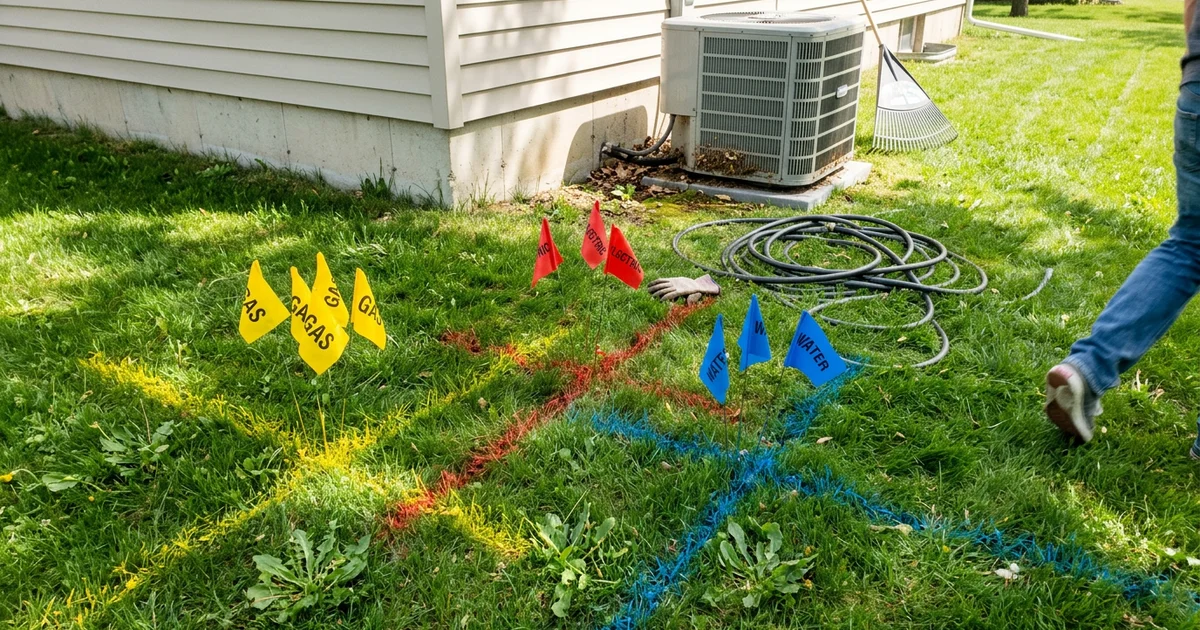
Our team checks utilities before anything else during feasibility. These buried lines dictate exactly where a stairwell can safely go.
Gas meters, water laterals, and electrical services determine the final scope of work. We evaluate these systems early because they materially affect both placement and price.
Knowing what sits beneath the surface prevents costly delays later. This careful planning is a core part of any utilities basement walkout project, leading into the standard basement walkout installation.
Step One: Blue Stakes of Utah 811
Our process begins with a mandatory locate request through Blue Stakes of Utah 811. Public utility owners dispatch technicians to mark their underground pipes with colored paint and flags.
State regulations mandate this notification at least two full business days before any dirt moves. We then have a 14-day window to begin the excavation before the ticket expires.
A standard blue stakes utah walkout locate keeps heavy machinery far away from vital city infrastructure.
Step Two: Private Lines
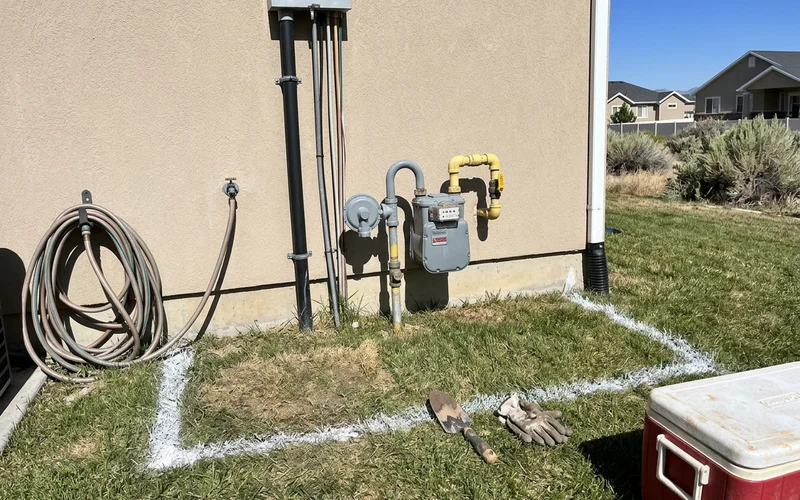
Our crews know that public locators generally stop marking right at the meter. Pipes installed by previous homeowners remain private and will not receive those brightly colored flags.
Hidden power feeds to detached garages, sprinkler manifolds, and pool circuits are incredibly common. We plan for these hidden obstacles during the initial site visit.
Finding them often requires specialized ground penetrating radar or electromagnetic tools.
| Utility | Typically marked by 811? | Common walkout impact |
|---|---|---|
| Gas service | Yes, to the meter | Placement, possible relocation |
| Water service | Yes | Placement |
| Sewer lateral | Varies | Placement, depth planning |
| Electrical service | Yes, to the meter | Placement |
| AC lines and condenser | No | Possible relocation |
| Irrigation | No | Usually rerouted |
| Garage or shed feed | No | Rerouting |
Choosing the Location Around Utilities
Our preferred strategy is to place the new door where the utilities are absent. Strict spacing requirements dictate many of these layout decisions.
Rocky Mountain Power mandates 36 to 48 inches of vertical clearance around electrical meters. We weigh these rigid rules against your desired interior floor plan and exterior grading.
Dominion Energy also requires a full three feet of working space around gas meters. Keeping the path clear ensures safe access for meter readers and maintenance workers.
When Relocation Makes Sense
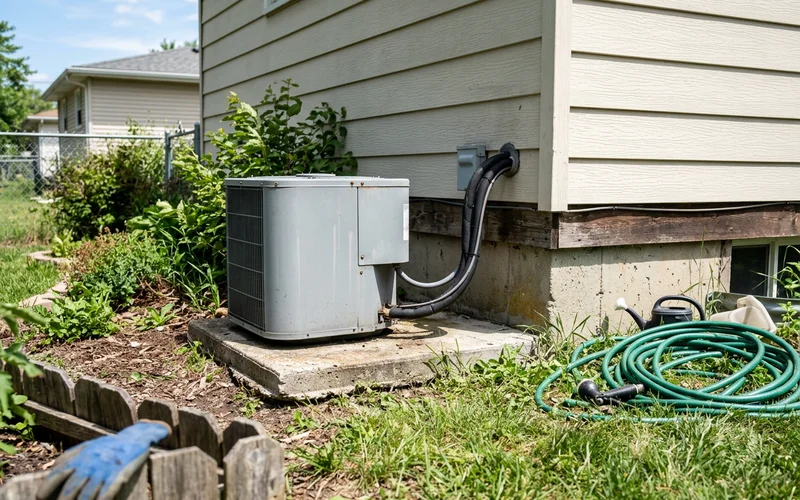
Our designers sometimes find that the ideal entry point sits right on top of a major service feed. Moving a fixture becomes the right call when no other spot works for the interior layout.
Relocation adds time to the schedule, but it opens up better design possibilities. We recommend shifting utilities under a few specific conditions.
- A simple PVC sprinkler pipe blocks the path.
- The AC condenser only needs to slide over a few feet.
- The interior floor plan strictly demands a specific door placement.
- The existing layout violates current safety clearances.
Gas or electrical service changes often involve the utility provider and their schedule. This expense is included in the initial scope so it is never a surprise.
Utilities are a cost factor, not usually a dealbreaker.
The bigger risk is not knowing about them until the excavator finds them. Early discovery eliminates that risk.
How Utilities Affect Cost
Our proposals always include the standard costs for locating and protecting existing lines. Moving heavy equipment or making service changes increases the budget based on the utility type.
Average 2026 relocation costs include:
- AC Condenser: $1,500 to $2,500
- Gas Meter: $1,000 to $3,000
We manage these service changes directly with the utility providers to avoid billing surprises. A gas line basement walkout relocation involves specific trenching and permit requirements.
These potential conflicts are why total project prices vary from $17,000 up to $40,000. You can find more pricing details in the Utah walkout cost guide.
What Happens If a Line Is Found During Digging
Our machine operators stop immediately if an undocumented pipe appears in the dirt. Utah law enforces a strict 24-inch tolerance zone around any marked facility.
Only specific techniques are permitted within this sensitive boundary:
- Hand digging with shovels
- Vacuum excavation
- Probe rods to locate the pipe safely
We switch to shovels to safely expose the line without causing damage. The team then identifies the pipe and decides whether to protect it in place or reroute it.
Careful excavation prevents dangerous accidents and costly repair bills.
Utilities Inside the House Matter Too
Our walkout feasibility check includes mapping the indoor side of your foundation wall. The new concrete opening goes directly through the basement structure.
This interior space often hides several common obstacles:
- Plumbing stacks and PEX lines
- HVAC ductwork
- Electrical breaker panels
We have to account for the National Electrical Code, which demands a 36-inch deep clearance in front of breaker boxes. Rerouting interior PEX plumbing is usually faster than moving an exterior main water service.
Discovering a cluster of interior pipes often steers the walkout to a completely different spot.
What You Can Do Before Our Visit
Our team appreciates any background information you can provide before the site walk. Reviewing your property details saves time and helps build a highly accurate proposal.
Taking a few quick notes ensures nothing gets missed during the initial inspection. We suggest preparing a quick checklist before the consultation.
- Note the exact locations of your gas meter and AC condenser.
- Gather any old property records or landscaping blueprints.
- Identify known upgrades like hot tub wiring or shed subpanels.
- Clear away brush or debris blocking access to exterior meters.
This basic preparation accelerates the planning phase. You can request a free walkout consultation to get the process started.
We will factor all visible utilities into your custom location plan.