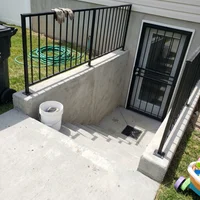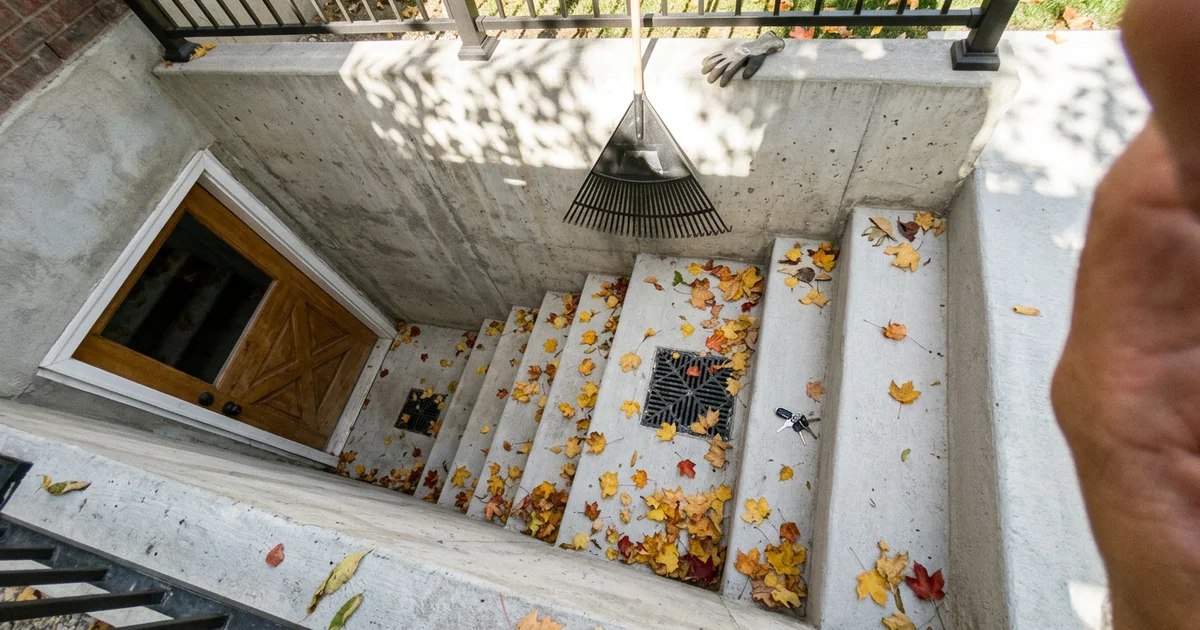
October along the Wasatch Front is when walkout drains quietly start losing ground. Leaves come down, landscape beds get cleaned up and blown around, and the first freeze/thaw nights show up before most people have put the hose away. By the time the 2026–27 snow season gets going, whatever is sitting in your walkout drain is going to stay there until spring runoff tries to push through it.
A ten-minute fall check now can save a wet basement in March. Here’s what we suggest.
Why Fall Matters More Than You’d Think
Three things arrive together in the fall, and they all head for the same low point.
- Leaves and landscape debris. Your walkout stairwell is the lowest spot near the house. Anything that blows or washes around the yard ends up on the landing.
- The first freeze/thaw cycles. Debris that gets wet and then freezes can mat over a grate and stay put.
- Winter is long. Snow piles up beside the stairwell, and when it melts in spring, a drain that’s half full of last October’s leaves has less room for the water.
None of this means your walkout is in trouble. It means fall is the cheapest, easiest time to find out.
The Quick Fall Check
If your walkout has an accessible catch basin, this takes a few minutes.
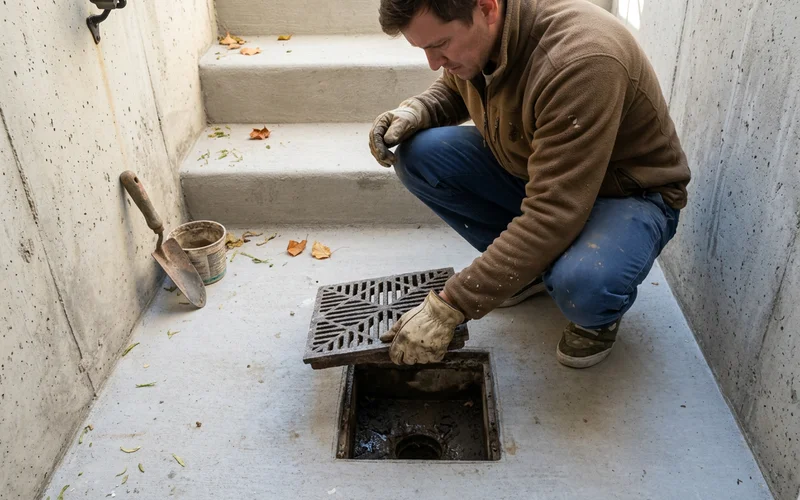
- Clear the landing. Sweep leaves and grit off the steps and landing so they don’t wash in later.
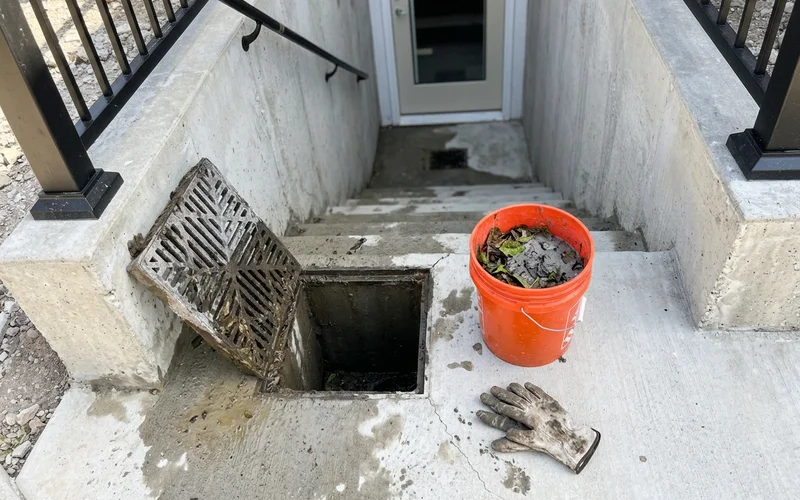
- Lift the grate. Look inside. A little sediment is normal. A basin that’s a third or more full of silt, leaves or mulch needs attention.
- Remove what you can reach. Scoop it out by hand or with a small trowel and bucket.
- Look for standing water. If water sits in the basin days after the last rain, the outlet or the drain bed may be partly blocked.
- Look up. Check the beds and slope above the stairwell. Bare soil or eroding mulch is where next spring’s sediment will come from.
These steps aren’t universal to every system. Some drains are designed differently, and some walkouts have no access point at all. If you can’t find a grate you can lift, that’s worth knowing too.
Don’t flush it deeper.
Running a hose into a basin full of sediment can push silt further into the system, where you can’t reach it. Remove what you can by hand instead.
Warning Signs From Last Spring
Think back to spring 2026. Did you see any of these?
- Water pooling at the bottom of the stairs or creeping toward the door
- The landing staying wet for hours after rain
- Mud, mulch or leaves washed down the steps
- Water at or under the threshold
If the answer is yes, a fall clean-out may buy you a season, but the cause probably hasn’t gone anywhere. Small floor-style drains, inaccessible openings and grading that funnels water into the stairwell are the usual suspects. Our guide to walkout drain maintenance covers the routine, and snowmelt and spring runoff explains why spring is the real test.
| What you saw | Likely next step |
|---|---|
| A little sediment, drains fine | Clean it and check again after winter |
| Basin packed with silt every season | Look at the sediment source and drain size |
| Pooling at the door after storms | Book a drainage evaluation |
| No accessible drain at all | Book a drainage evaluation |
When to Book an Evaluation This Fall
Book a walkout drainage evaluation before winter if your walkout flooded or pooled this year, the drain clogs every season, or you can’t see or reach the drain. We look at the whole system: drain size, sediment, landing slope, grading, access and waterproofing. Drainage repair is scoped after that onsite visit, and some work is easier to plan before the ground freezes.
Planning a New Walkout for Spring 2027?
Winter is a good time to get the paperwork moving. Consultation, engineering and permitting can happen while the ground is cold, so construction can start sooner once conditions allow. If you’ve been thinking about adding a walkout, now’s the time to find out if one will work for your home.
Seeing water where it shouldn’t be? Request a drainage evaluation.